3D printing "reshapes" machine vision equipment: a new solution for lightweight, high precision, and low cost.
Published: 2026-04-23 10:51:29
Return to list
Have you ever encountered this in industrial inspection scenarios?
Are visual inspection devices complex in structure and time-consuming to install and debug? Are traditional metal brackets bulky and inconvenient to move? Are custom-made sensor brackets for special scenarios prohibitively expensive?
With its unique manufacturing advantages, 3D printing technology is quietly integrating deeply with machine vision inspection equipment, bringing about a new revolution in the industry.
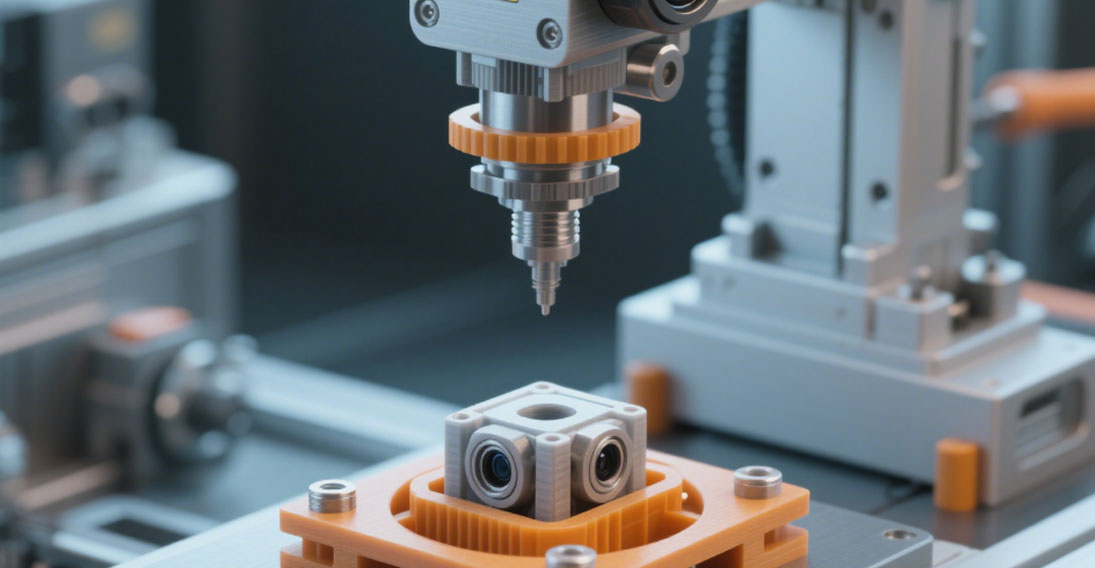
How exactly does 3D printing empower machine vision inspection equipment?
1. Lightweight structure
Topology optimization design and high-performance materials reduce equipment weight by 40%+, thus reducing the burden on the equipment.
2. Integrated Management
Print embedded sensor brackets (such as lens mounts and light source slots) to eliminate assembly errors.
3. Rapid iteration
Customized equipment parts prototypes can be completed within 24 hours, reducing trial and error costs by 70%.
Comparison of properties of various materials (data from the internet):
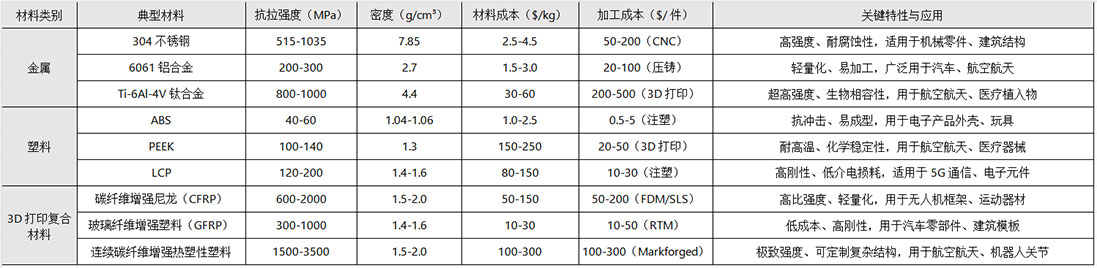
3D printing technology offers a high degree of design freedom and rapid prototyping capabilities, enabling the rapid transformation of complex design concepts into physical objects. In the manufacturing of machine vision inspection equipment, it can achieve complex structural designs that are difficult to accomplish using traditional processing techniques. Furthermore, in some specialized inspection scenarios, traditional general-purpose equipment cannot meet the requirements, while 3D printing technology can tailor-make inspection equipment components according to the specific inspection object and environment, allowing the equipment to better adapt to complex working conditions and improve inspection efficiency.
With continuous technological advancements, the integration of 3D printing and machine vision inspection equipment will become increasingly closer. In the future, we may see more intelligent and personalized inspection devices, which will play a vital role in more fields and provide a powerful impetus for the development of intelligent manufacturing.

Online message